Choose which cookies we may use. You can change your mind at any time on our Cookies page.

Read our cookie policy

Staff surveys and appraisals for law, accountancy and financial services firms.

In a professional services firm, your people are what clients buy, and the pressures that wear them down are built into how firms work. Ten Space brings staff surveys, performance management, appraisals and 360 feedback together, so you can hear every office and grade, keep your trainees and associates, and make progression fair.

Why does staff experience matter so much in a professional services firm?

Because it makes good business sense: your people's judgement is the service, and workload puts it at risk. In a US survey of more than 700 auditors, auditors said they work about five hours a week beyond the point where they believe audit quality starts to fall, and often 20 hours beyond it at the peak of busy season.

Ten Space helps you hear from every office and grade, see where hours, behaviour or progression are a risk, and give partners and managers the conversations and feedback to act on it.

A team meeting around a table with laptops, seen from above

How does listening to staff help you meet your obligations?

The FCA treats speaking up as a way to reduce the risk of misconduct, and its rules on non-financial misconduct have applied since 1 September 2026.

From 30 October 2026, every employer must take all reasonable steps to prevent sexual harassment, and must not permit harassment by third parties, such as clients.

With Ten Space, what your people tell you, and what you did about it, is kept in one place, office by office: each action stays linked to the result it came from.

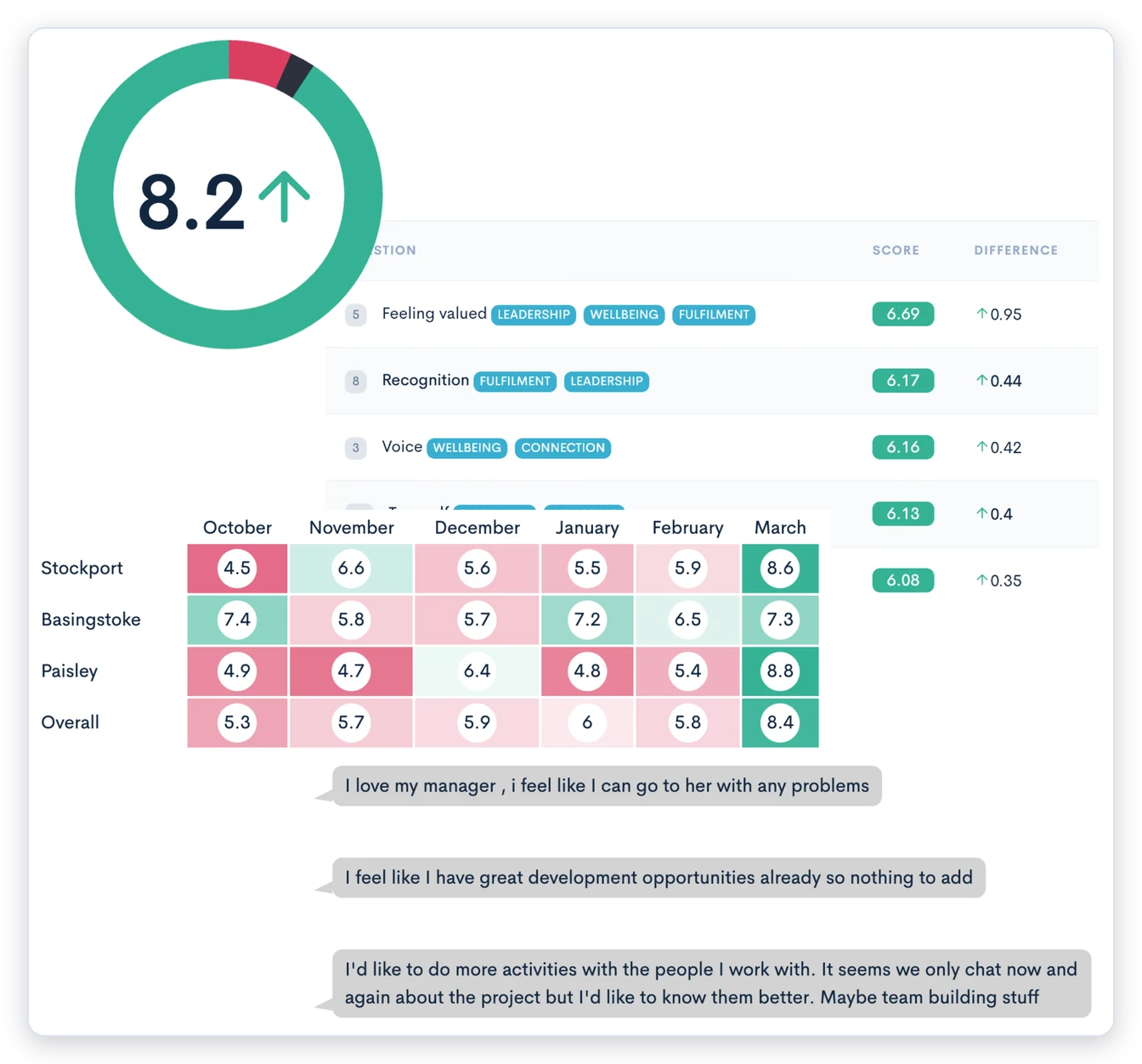
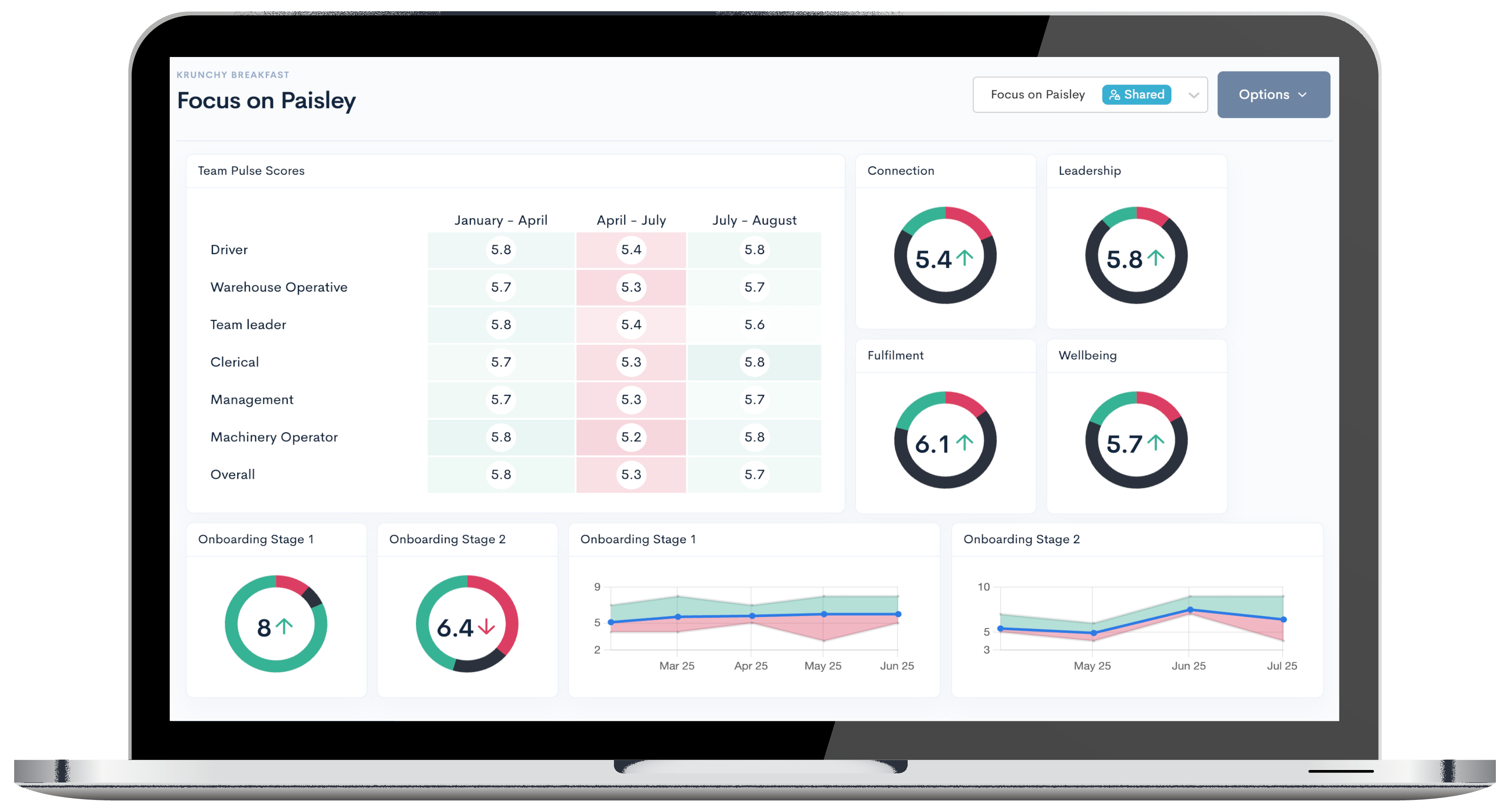
A Ten Space dashboard with demo results: a headline score, question scores, a heatmap by site and comments

How do you get honest answers when everyone knows everyone?

With the ethics filter enabled (the most common setup), results are only shown for groups of six or more. So a small team's answers aren't shown on their own. Everyone sees what their role allows, and only that. You set the restrictions, so a partner sees their own team's results and the board sees the firm.

Keep it short for busy fee earners. Send it by email, or to their phone in WhatsApp or by SMS. Invitations and reminders go out automatically, and people who have already answered aren't chased.

Business services teams answer the same way, and every survey can be split by any segmentation item, such as office, practice area, grade or team.

See the Employee Promise for more.

A woman reading a tablet

How do appraisals and 360s build on what people tell you?

In the same platform as your surveys. Appraisals run on templates your HR team controls, on a cycle you choose, ad hoc or both, with the gaps between self and manager reviews highlighted. One-to-ones give the two people in any regular conversation a shared agenda, with notes and actions kept against every talking point. With 360 Performance, partners and managers can get feedback from the people around them, confidential, and released when you're ready.

It matters most where people manage without being taught how: LawCare found that only 54.6% of legal professionals who manage others had any training to do it.

Ten Space's questions for professional services are ready for appraisals and one-to-ones, and the goals and actions that come out of a survey carry through to each person's reviews.

See performance management for more.

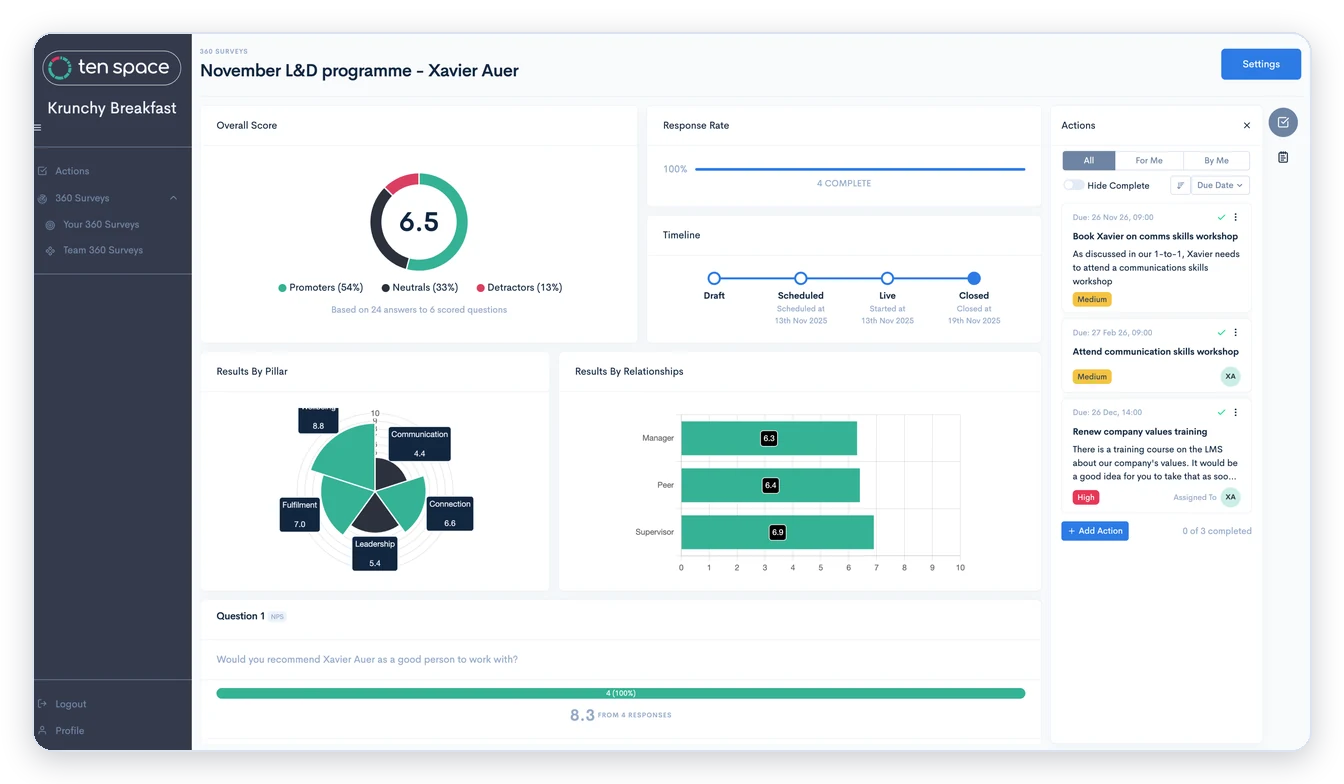
One person's 360 results in Ten Space, with demo data: scores by pillar and by relationship, and their actions

Law, accountancy and finance staff survey questions, by issue

The questions are where it starts: they show you where to act. Each group below begins with what research on law, accountancy and financial services has found, says what the questions help you see and how to track them, then gives the questions in a box. Statements are answered on a scale from strongly disagree to strongly agree.

The first question in each box is the core question for that issue. Keep it the same from one survey to the next: research on measuring change over time shows that comparisons only hold when the question stays the same. Use the rest as they are, add your own, or ask us: we work with you to fine-tune your questions.

Workload and staffing · Burnout and wellbeing

Are hours and billing targets sustainable?

In LawCare's 2025 study of 1,541 people working in law, 78.7% worked beyond their contracted hours, 45% worried about meeting their chargeable-hour or billing targets, and 59.1% had poor mental wellbeing, with people aged 26 to 35 the most burnt out. Among 301 UK chartered accountants, 44% reported symptoms of burnout constantly or often in the past year.

In a field study of auditors during busy season, daily support from supervisors went with less fatigue at the end of the day.

What it helps you see: where hours, targets and peaks such as busy season or completions are pushing people towards burnout, by team, office and grade.

Questions to ask

  • I can usually get my work done well in the time I have.
  • My targets for billable hours or utilisation are realistic.
  • I have enough energy left for life outside work.
  • Work is shared fairly across the team.

How to track it: ask in a short pulse survey before, during and after your busiest periods, and compare teams and grades.

Turnover and retention

Will your trainees and associates stay?

In LawCare's study, 56.2% of legal professionals could see themselves leaving their current workplace within five years, and 32.1% could see themselves leaving law altogether. Students on the audit route fell by 4.3% in 2025, while 59.6% of staff at audit firms with public interest clients are under 35. Thinking about leaving is the strongest single predictor of actually leaving.

What it helps you see: who is thinking of leaving, at which grade and in which team, and whether development and a future at the firm are what's missing.

Questions to ask

  • I see myself still working here in a year's time.
  • The person who supervises my work takes an interest in my development.
  • I can see a future for myself at this firm.
  • What would make you more likely to stay?

How to track it: ask the core question in every survey, follow trainees and new joiners with an onboarding journey, and ask leavers why they went with an exit survey.

Discrimination, harassment and inclusion

Is everyone treated with respect, at every grade?

In LawCare's study, 19.5% had been bullied, harassed or discriminated against at work in the past year. 65% of them named a line manager or supervisor, and 71.8% said it was not dealt with appropriately.

The FCA's survey of 984 wholesale financial firms found reported incidents of non-financial misconduct rising between 2021 and 2023.

What it helps you see: what people experience and see, from colleagues, managers and clients, whether they would report it, and whether they trust what would happen next.

Questions to ask

  • I am treated with respect by the people I work with.
  • Bullying and harassment are not tolerated here, whatever someone's seniority.
  • If I raised a concern about a senior person's behaviour, it would be taken seriously.
  • People here are treated fairly whatever their background.

How to track it: ask in every survey, with the ethics filter on so results are only shown for groups of six or more, and compare offices and grades. An alert tells the right person that an answer needs attention.

Speaking up and being heard

Do people feel safe to speak up?

Legal professionals in LawCare's study averaged 18.0 on a psychological safety scale that runs from 7 to 35, in the lower half, and those with the highest burnout and workload felt least safe. A meta-analysis of 136 samples links psychological safety with how well people do their jobs.

What it helps you see: whether people can admit mistakes, challenge decisions and raise concerns, team by team, before a problem becomes a matter for a regulator.

Questions to ask

  • I feel able to raise a concern without worrying about what happens next.
  • It's safe to admit a mistake here.
  • I can challenge a decision without it counting against me.

How to track it: ask in a pulse survey on a schedule you set, and watch for teams where scores fall.

Management and support

Are partners and managers equipped to manage?

Fewer than a third of legal professionals who manage others had their targets or billable hours adjusted for the time that managing takes, LawCare found. A review of three decades of research links leaders' behaviour with their staff's stress and wellbeing.

What it helps you see: which teams have managers with the time and skill to support people, give useful feedback and notice when someone is struggling.

Questions to ask

  • My manager supports me when I need it.
  • My manager gives me useful feedback on my work.
  • My manager has time to support me, not just to allocate work.
  • My manager notices when I'm under too much pressure.

How to track it: split results by team and practice area, with the ethics filter on, and bring what you learn into managers' appraisals and one-to-ones.

Training and progression

Is progression fair and clear?

Women are 55% of lawyers but 35% of full equity partners, and in the largest firms 9% of partners are from a Black, Asian or minority ethnic background, the SRA found. At audit firms with public interest clients, women are 47.7% of managers but 26.9% of partners, and financial and insurance activities have the largest median gender pay gap of any UK industry, at 28.4%.

What it helps you see: whether people understand what it takes to progress, and whether work, opportunities and promotion feel fair to everyone.

Questions to ask

  • I have had the training I need to do my job well.
  • I understand what I need to do to progress here.
  • Work and opportunities are allocated fairly.
  • People from all backgrounds have a fair chance of progressing here.

How to track it: ask once a year in your fuller survey and, where groups are big enough, compare by grade, gender and background.

How do you track wellbeing, culture and retention across a firm?

Ask the same core questions in a short pulse survey, normally fewer than ten questions, on a schedule you set, or after busy season, a year end or a merger. It can repeat automatically, so you can see whether things are moving.

Follow trainees and new joiners with an onboarding journey, with check-ins such as 30, 60 and 90 days after they join, and ask leavers why they went with an exit survey.

Compare offices, practice areas and grades on dashboards for professional services. AI analysts specific to your sector, configured for your organisation, summarise every survey, team and question, and suggest prioritised actions you can accept, assign or ignore. The decisions stay with you.

Then tell people what you did. Research on employee surveys found that staff who skip surveys are more likely to be planning to leave, and to believe nothing will be done with what they say.

Turn what you hear into actions, each with an owner and a due date, linked to the result it came from. Reminders go out automatically, and progress is tracked for you.

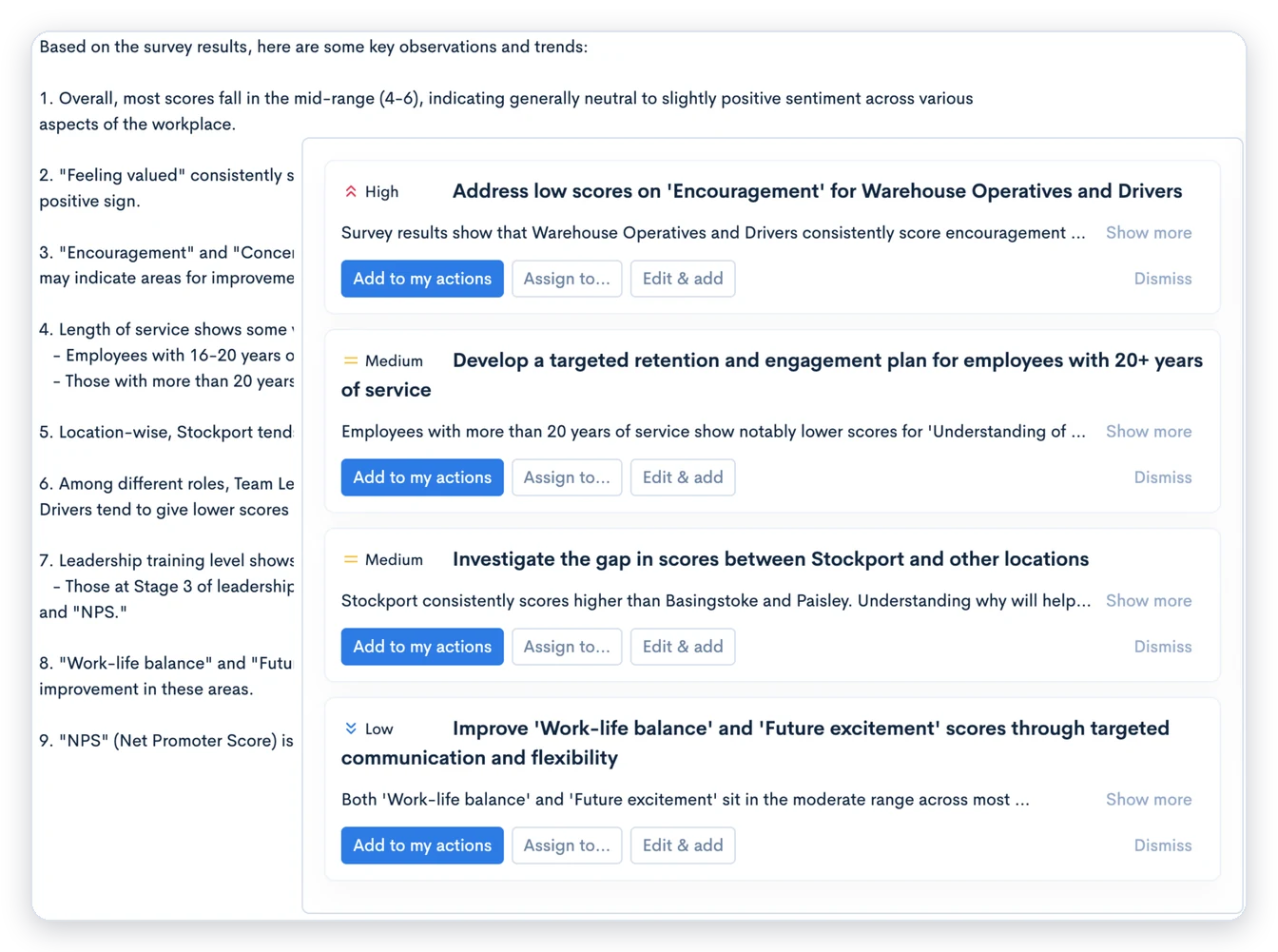
An AI summary of a demo survey in Ten Space, with prioritised suggested actions

What does Ten Space do for professional services firms?

It brings staff surveys and appraisals together in one platform, with UK-based experts alongside you.

  • Hear from fee earners and business services alike, by email or on their phones.
  • See wellbeing, respect and speaking up by office, practice area and grade. With the ethics filter on, results are only shown for groups of six or more.
  • Run appraisals that highlight where self and manager reviews differ, with goals and one-to-ones in the same platform.
  • Give partners and senior leaders feedback with 360 Performance, Ten Space's 360 feedback tool: confidential, and released when you're ready.
  • Follow trainees and new joiners with onboarding check-ins, and ask leavers why they went.
  • Work with a dedicated client success manager: a named UK-based expert who works alongside your team.
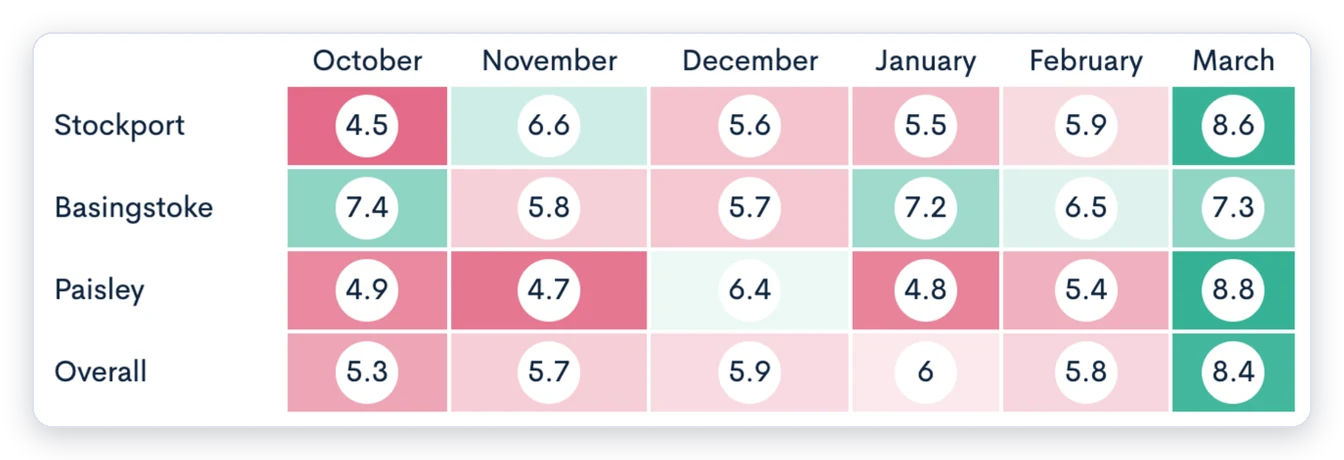
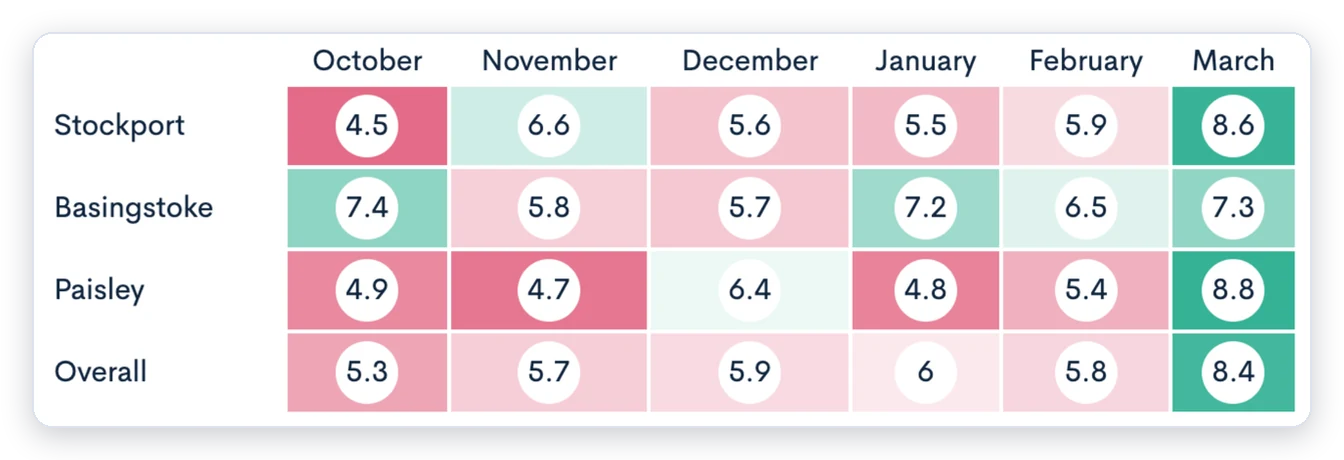
A heatmap of demo results in Ten Space, comparing three sites month by month
Case Study

Exploring engagement through change, growth and acquisition

First4Lawyers logo

Questions people ask

How often should a law or accountancy firm survey its staff?

Often enough to act on what you hear. You might run a fuller survey once a year away from busy season, short pulse surveys in between, and an onboarding journey and exit survey as people join and leave. There is no fixed rhythm: we help you choose one that fits.

Can partners see who said what?

Not unless a survey is set up that way. With the ethics filter enabled (the most common setup), results are only shown for groups of six or more. If a survey is identified, authorised users can see which individual answered, and people are told before they send any answers. Everyone sees what their role allows, and only that.

Can we run appraisals and 360s in the same platform?

Yes. Appraisals, 360 Performance, goals and one-to-ones are in the same platform as your surveys, so a review builds on what people have already told you.

Can business services staff take part too?

Yes. Everyone in the firm can answer the same survey, by email, WhatsApp or SMS, and every survey can be split by any segmentation item, so fee earners and business services are seen apart.

Does Ten Space have staff survey questions for professional services?

Yes. Ten Space has questions specific to your sector for surveys, journeys, appraisals and one-to-ones, and dashboards for your sector for surveys and journeys. Use them as they are or add your own, and we work with you to fine-tune your questions.

Can we compare offices, practice areas and grades?

Yes. Every survey can be split by any segmentation item, such as office, practice area, grade or team. Paper, open-link and QR-code surveys are pre-tagged with as many segmentation options as you need.

Sign up for our regular round up