Choose which cookies we may use. You can change your mind at any time on our Cookies page.

Read our cookie policy

Employee engagement for charities, from head office to the front line.

A charity staff survey measures employee engagement across your charity: whether people still feel the mission, can manage their workload, are paid and treated fairly, and plan to stay. Ten Space brings staff surveys, performance management and appraisals together, so you can hear head office, shops and frontline services alike, and help your people grow.

Why does staff engagement matter so much in a charity?

Because it makes sense for your mission: your people deliver it, often for less than they could earn elsewhere, and when they go, services suffer. In 2023, 46% of charities with hard-to-fill posts had paused some of their services, and charity employees earn 7.0% less an hour than similar workers in other sectors.

Belief in the cause doesn't keep people on its own. In one study of a US nonprofit, dissatisfaction with pay outweighed commitment to the mission when staff thought about leaving, and a second study found the same for pay and career prospects.

Ten Space helps you hear from every team, see where workload, pay or leadership are wearing people down, and give your leaders and trustees the picture they need.

A woman with folded arms in front of a team working in an office

How does listening to staff help you meet your obligations?

The Charity Commission expects charities to protect staff and volunteers from undue harm, with clear policies on bullying, harassment and whistleblowing.

HSE says employers must manage the risks before anyone works alone, and from 30 October 2026 employers must take all reasonable steps to prevent sexual harassment of their staff, including by third parties.

With Ten Space, what your people tell you, and what you did about it, is kept in one place, service by service, with results your trustees can see for themselves: each action stays linked to the result it came from.

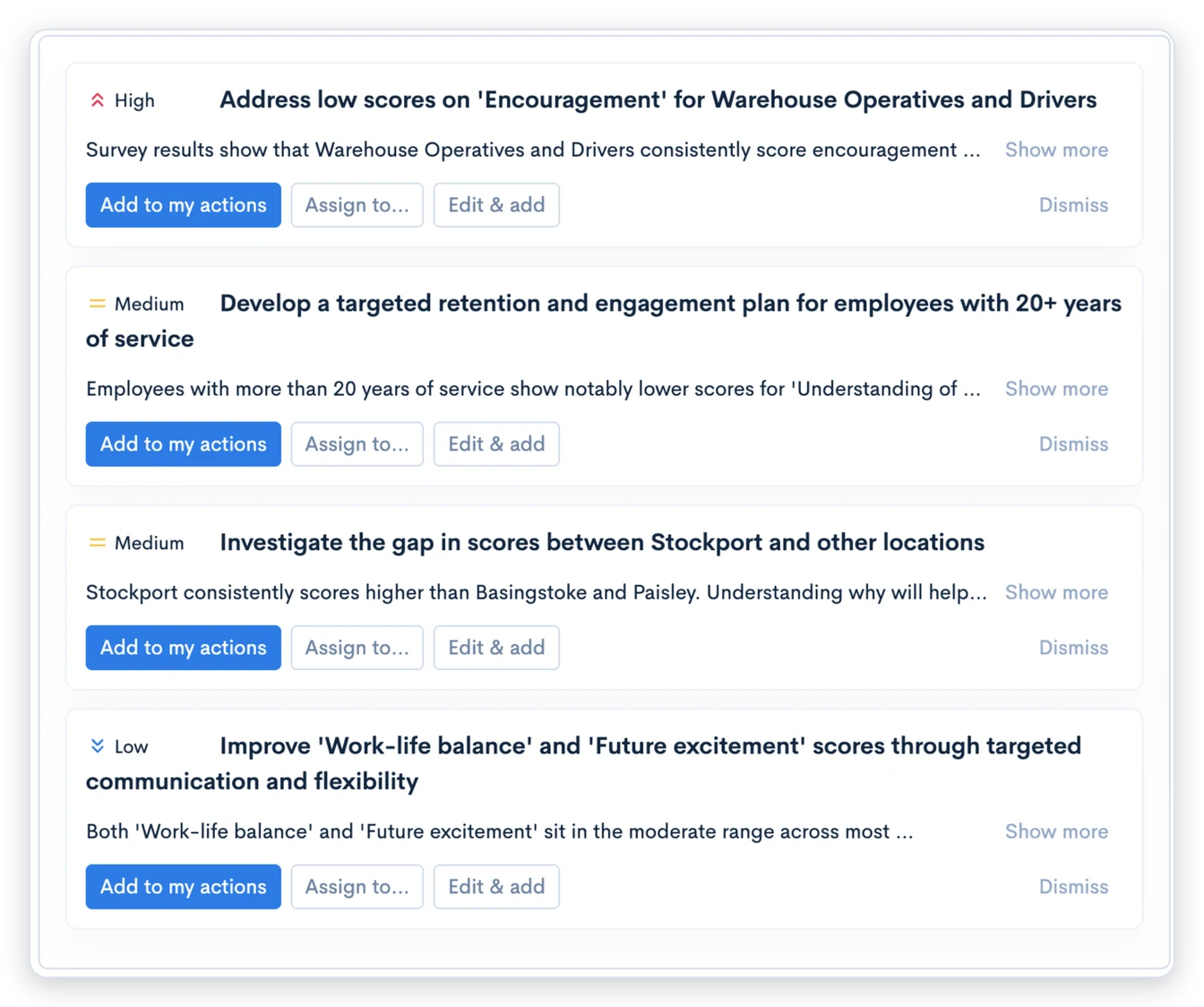
Prioritised suggested actions for a demo survey in Ten Space, each of which you can accept, assign or ignore

How do you hear from busy frontline, shop and outreach staff?

Support workers and shop staff can answer in WhatsApp or by SMS between appointments or on a break, or scan a QR code on the noticeboard. People scan the code or follow the link to take part. We can also share paper forms for you to print. Scanned forms are read automatically.

Every survey can be split by any segmentation item, such as service, region or role, so you can see how a frontline service compares with head office.

A survey sent only by email to people who rarely open it will miss them: web surveys get lower response than other ways of asking, and SMS invitations work better than email for surveys answered on a phone.

Everyone sees what their role allows, and only that. You set the restrictions, so a service manager sees their own team's results and your leadership sees the whole charity.

See reach every employee for more.

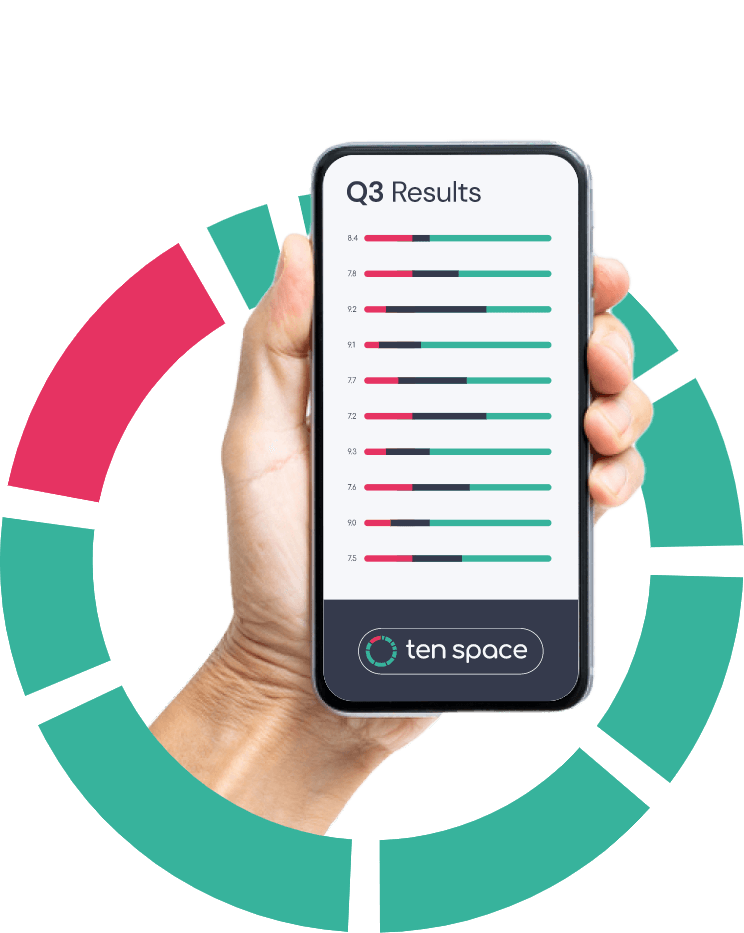
A phone showing survey results in Ten Space

How do you develop people in a small charity?

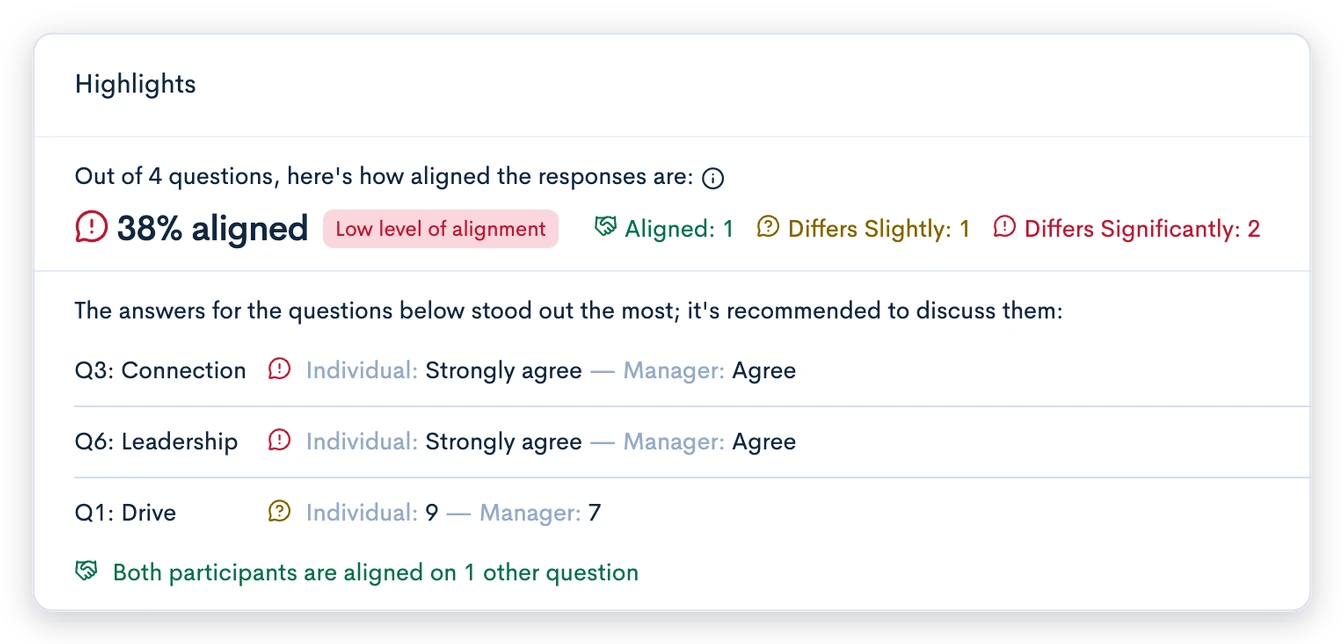
Alongside your surveys, in the same platform. Appraisals run on templates your HR team controls, on a cycle you choose, ad hoc or both, with the gaps between self and manager reviews highlighted. One-to-ones give the two people in any regular conversation a shared agenda, with notes and actions kept against every talking point. With the WhatsApp or SMS add-on, people can complete their part in the chat, question by question, so staff with no work email take part too.

Many charities are small: more than half of voluntary sector employees work for organisations with fewer than 50 staff, where there may be no obvious next job. Research across sectors finds that support for development keeps people only when they can also see a way to progress, so it pays to ask about both.

Ten Space's questions for charities are ready for appraisals and one-to-ones, and the goals and actions that come out of a survey carry through to each person's reviews.

See performance management for more.

An appraisal in Ten Space with demo data: how closely the employee's and the manager's answers agree, and the questions where they differ most

Charity staff survey questions, by issue

The questions are where it starts: they show you where to act. Each group below begins with what research on the voluntary sector has found, says what the questions help you see and how to track them, then gives the questions in a box. Statements are answered on a scale from strongly disagree to strongly agree.

The first question in each box is the core question for that issue. Keep it the same from one survey to the next: research on measuring change over time shows that comparisons only hold when the question stays the same. Use the rest as they are, add your own, or ask us: we work with you to fine-tune your questions.

Workload and staffing · Burnout and wellbeing

Are workload and frontline work wearing people down?

In 2023, 24% of charities said staff burnout was making it harder to keep people, and among charities struggling to recruit, 70% said workloads had risen and 52% that staff were working longer hours.

In a study of 112 UK frontline homelessness workers, depression and stress were well above population norms, and having supervision available did not by itself go with lower stress. Across 41 studies of people who work with others' trauma, burnout and secondary traumatic stress went closely together, and a 2025 review found little good evidence on what helps, and called for consistent measures over time.

What it helps you see: which teams and services are most stretched, whether hours run past contracts, and whether supervision and support actually help the people doing the hardest work.

Questions to ask

  • I have enough energy left for life outside work.
  • My workload is manageable within my contracted hours.
  • I can get support after a difficult or distressing piece of work.
  • The supervision I get helps me cope with the hardest parts of my job.

How to track it: ask frontline teams the same questions in a pulse survey on a schedule you set, and compare services and regions to see where strain is building.

Pay and recognition

Do people feel fairly paid, or is the mission covering the gap?

In Pro Bono Economics' analysis, the charity pay gap peaks at 9.4% for people aged 46 to 50, so experienced staff feel it most.

What it helps you see: whether pay and recognition are a problem even where belief in the cause is high, so a strong mission score doesn't hide a weak pay score.

Questions to ask

  • I am fairly paid for the work I do.
  • I feel valued for the work I do.
  • I understand how pay is decided here.

How to track it: ask once a year in your fuller survey, and set the answers beside your belief-in-the-mission questions, rather than reading one as the other.

Management and support · Speaking up and being heard

Do people believe in the mission, and trust the people leading it?

In a self-selected survey of bullying in charities, the chief executive was involved in 45% of the cases reported and senior managers in 57%, and formal complaints were dealt with satisfactorily in just 3%.

What it helps you see: how people see their line manager and senior leaders, asked about separately, and whether they would feel safe raising a concern about someone senior.

Questions to ask

  • My manager supports me when I need it.
  • I understand how my work helps our cause.
  • I trust our senior leaders to make the right decisions.
  • I could raise a concern about a senior person's behaviour without fear.

How to track it: keep these questions in every fuller survey, and set who sees what, so trustees can see the results for themselves.

Turnover and retention

Will short-term funding cost you good people?

In 2023, 54% of charities had vacancies, and 83% of those found recruiting difficult. Research on UK and Australian non-profits links the way government funds services to low pay, casual contracts and harder work.

What it helps you see: who is thinking of leaving, and how short-term contracts and funding affect people, by contract type and funding stream.

Questions to ask

  • I see myself still working here in a year's time.
  • I feel secure in my job.
  • I know whether my role will continue beyond its current funding.
  • What would make you more likely to stay?

How to track it: ask the core question in every survey, follow new starters with an onboarding journey and leavers with an exit survey, and split results by contract type.

Discrimination, harassment and inclusion

Is everyone included, whatever their background?

In ACEVO's 2020 research with almost 500 Black, Asian and minority ethnic people working in the sector, 68% had experienced, witnessed or heard stories of racism, and half felt they had to tone down their behaviour to fit in. People from a Global Majority background make up 13% of the voluntary sector's workforce, against 18% of the UK population.

What it helps you see: whether people from every background feel treated fairly and able to be themselves, and whether they would report racism or bullying.

Questions to ask

  • I am treated with respect by the people I work with.
  • People here are treated fairly whatever their background.
  • I can be myself at work.
  • If I experienced or saw racism or bullying, I would feel able to report it.

How to track it: split results by background and disability where groups are big enough, with the ethics filter on so results are only shown for groups of six or more.

Lone working · Safety

Are outreach and support staff safe on their own?

In the Charity Commission's 2026 research with almost 3,000 trustees, 2% said their staff had been threatened in person, which it estimates could mean staff in up to 3,000 charities.

The Employment Rights Act 2025 adds a duty, in force from 30 October 2026, not to permit your staff to be harassed by third parties, such as the members of the public that outreach and shop staff meet, alongside a duty to take all reasonable steps to prevent sexual harassment.

What it helps you see: whether people who work alone, in the community or in shops, feel safe, know how to get help, and see threats followed up.

Questions to ask

  • When I work alone, I know how to get help quickly.
  • I feel safe at work.
  • Someone always knows where I am and when I should be back.
  • Threats or abuse I report are followed up.

How to track it: ask outreach, support and shop teams in a short pulse survey by WhatsApp or SMS, and compare them with office-based teams. An alert tells the right person that an answer needs attention.

How do you track engagement in a charity over time?

Measure engagement against our engagement model or your own values, then ask the same core questions in a short pulse survey, normally fewer than ten questions, on a schedule you set or after a restructure or a funding change.

Follow new starters with an onboarding journey, with check-ins such as 30, 60 and 90 days after they join, and ask leavers why they went with an exit survey. These are surveys like any other: they go out automatically, by email, WhatsApp or SMS.

Compare services, regions and roles on dashboards for charities, and export one as a PDF for your trustees. AI analysts specific to your sector, configured for your organisation, summarise every survey, team and question, and suggest prioritised actions you can accept, assign or ignore. The decisions stay with you.

Then tell people what you did. Research on employee surveys found that staff who skip surveys are more likely to be planning to leave, and to believe nothing will be done with what they say.

Turn what you hear into actions, each with an owner and a due date, linked to the result it came from. Reminders go out automatically, and progress is tracked for you.

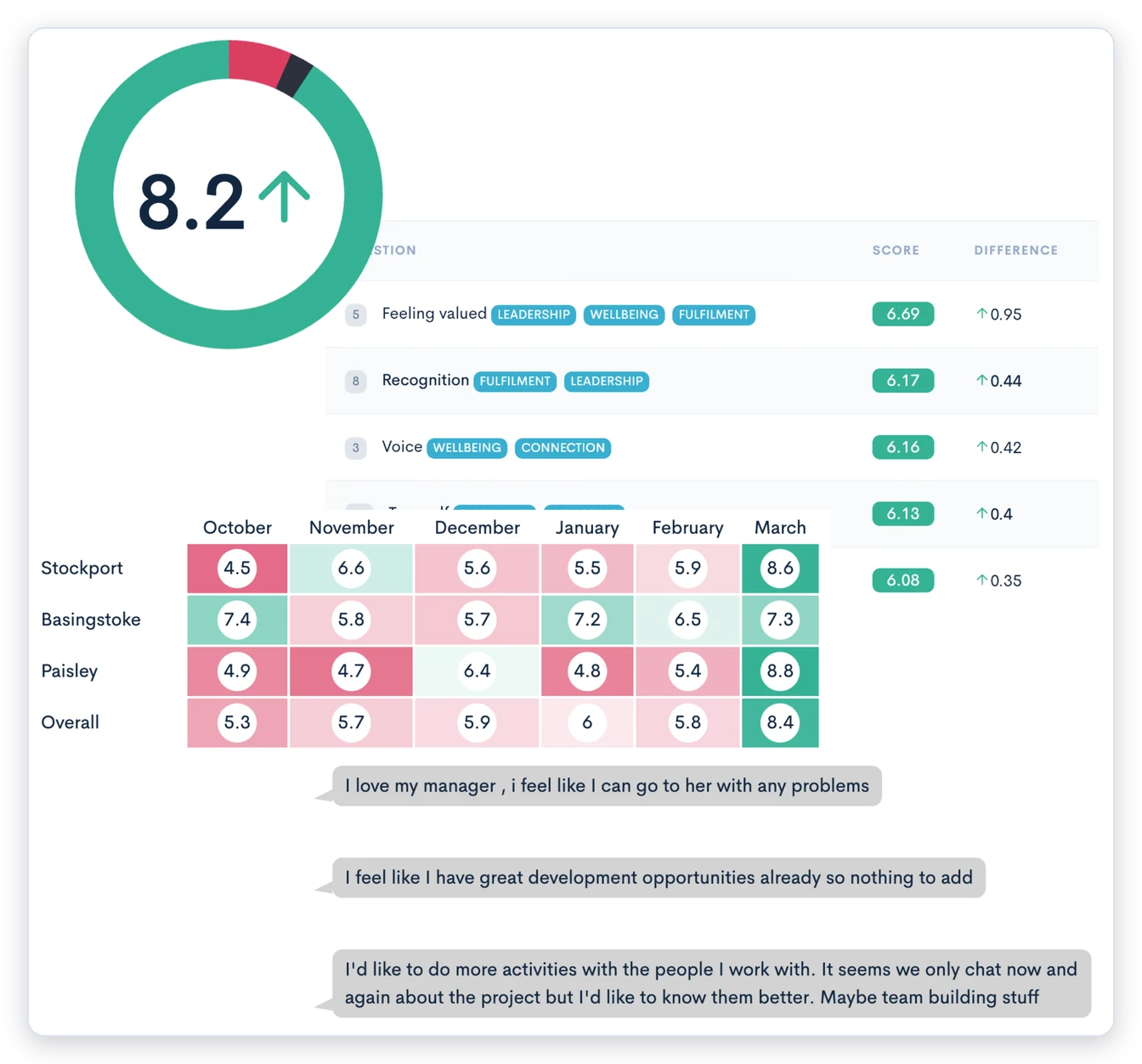
A Ten Space dashboard with demo results: a headline score, question scores, a heatmap by site and comments

What does Ten Space do for charities?

It brings staff surveys and appraisals together in one platform, with UK-based experts alongside you.

  • Hear from head office, shops, outreach and frontline services, by email, WhatsApp, SMS, QR code or even paper.
  • Measure engagement against our engagement model or your own values.
  • See strain building, service by service, on dashboards for charities, and export them as PDFs for your trustees.
  • With the WhatsApp or SMS add-on, run appraisals that frontline staff can complete on their phones.
  • Turn what you hear into actions, with reminders that go out automatically.
  • Work with a dedicated client success manager: a named UK-based expert who works alongside your team.
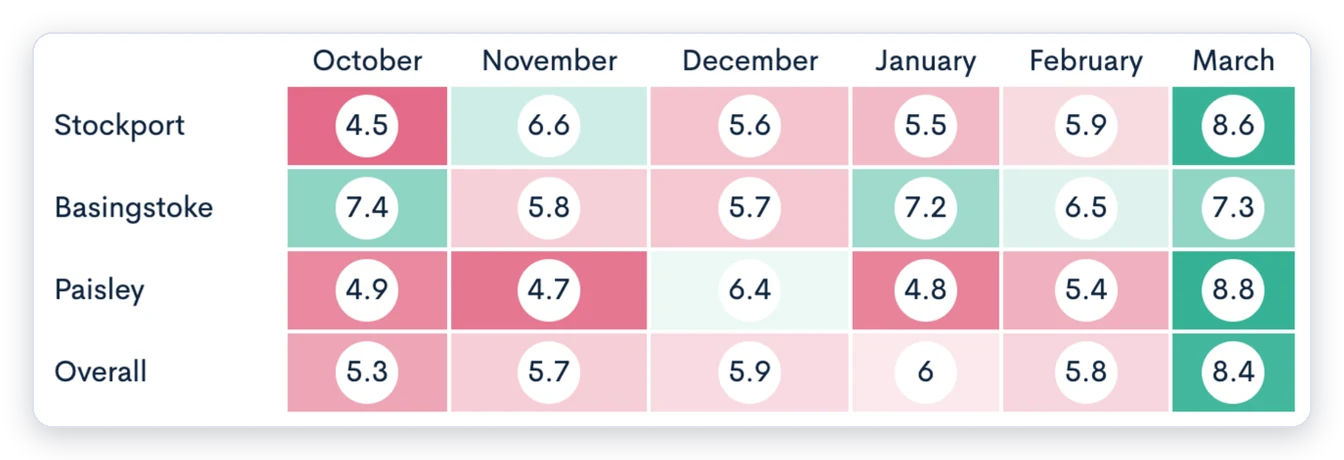
A heatmap of demo results in Ten Space, comparing three sites month by month

Questions people ask

Is a staff survey the same as an employee engagement survey?

An employee engagement survey is one kind of staff survey. It asks how committed and energised people feel about their work and your charity, alongside what drives that, such as workload, management and pay. Ten Space measures engagement against our engagement model or your own values.

Can we survey volunteers as well as paid staff?

Yes. Anyone you invite can answer, by email, WhatsApp or SMS, or by scanning a QR code. Ask volunteers their own questions, and split the results so staff and volunteers are seen apart.

Can frontline staff complete appraisals on a phone?

Yes. With the WhatsApp or SMS add-on, people can complete their part in the chat, question by question, so staff with no work email take part too. Goals and one-to-ones sit in the same platform, so reviews build on what people have told you.

Will charity staff answer honestly?

People answer more openly when they trust how their answers are used. With the ethics filter enabled (the most common setup), results are only shown for groups of six or more. Everyone sees what their role allows, and only that. Telling people what changed after each survey builds that trust.

Does Ten Space have staff survey questions for charities?

Yes. Ten Space has questions specific to your sector for surveys, journeys, appraisals and one-to-ones, and dashboards for your sector for surveys and journeys. Use them as they are or add your own, and we work with you to fine-tune your questions.

How do we share results with trustees?

With a dashboard built for them. A dashboard can be exported as a PDF, in A4 or presentation format, ready for a board pack, and we work with you to build custom dashboards and reports for you and your leaders.

Sign up for our regular round up