Choose which cookies we may use. You can change your mind at any time on our Cookies page.

Read our cookie policy

Staff surveys and appraisals for hospitality, because your team is what guests remember.

In hospitality, guests remember the people who looked after them, and those people move on faster than in any other industry. Ten Space brings staff surveys, performance management and appraisals together for hotels, restaurants, pubs, bars, catering and events, so you can hear every shift, keep your best people and help them grow.

Why does staff experience matter so much in hospitality?

Because it makes good business sense: your team is the service guests pay for, and keeping a good team is the industry's hardest problem. Hospitality has the highest staff turnover of any UK industry, 52% a year against a UK average of 34%, and a meta-analysis of 58 samples found that how staff see their organisation's focus on service is a key link between what happens inside it and what the people it serves experience.

The work is demanding: long, unsociable and often unpredictable hours, on pay that is often low. In 2025, 24.6% of jobs in hospitality occupations were paid at the minimum wage.

Ten Space helps you hear from every shift and venue, see where people are struggling or about to leave, and give them the conversations, training and recognition that help them stay.

A woman at the counter of a restaurant, using a till screen

How does listening to staff help you meet your obligations?

From 30 October 2026, employers must take all reasonable steps to prevent sexual harassment of their staff, and must not permit harassment by third parties, such as guests. The Equality and Human Rights Commission's guidance names anonymised staff surveys as one way to check whether prevention is working, and warns that the number of complaints is not a reliable guide.

Under the Employment Rights Act 2025, employers must also consult their workers when they write or revise a tipping policy, and the UK government's timeline puts the change in tipping law at 1 January 2027.

With Ten Space, what your people tell you, and what you did about it, is kept in one place, venue by venue: each action stays linked to the result it came from.

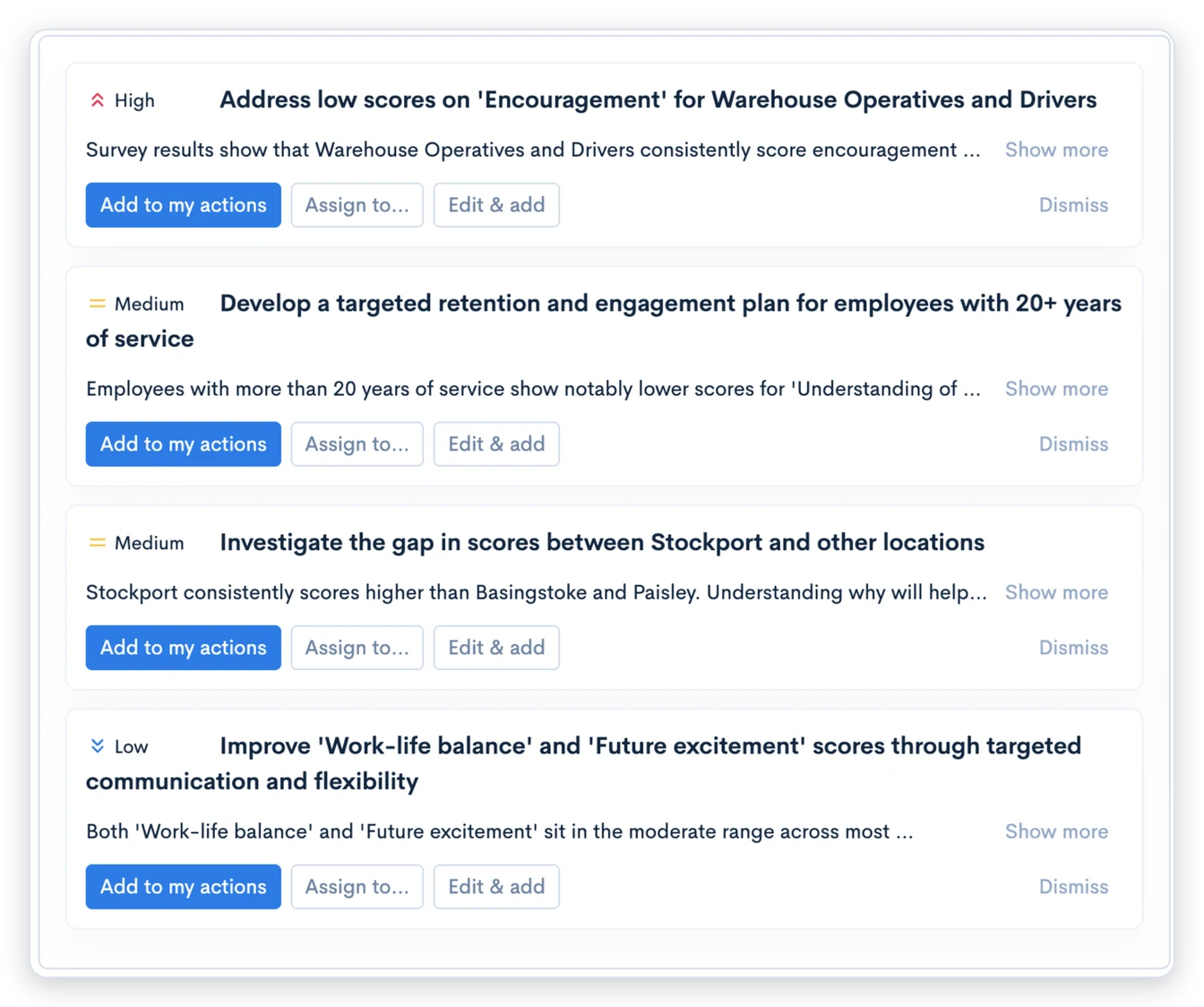
Prioritised suggested actions for a demo survey in Ten Space, each of which you can accept, assign or ignore

How do you hear from busy teams who are never at a desk?

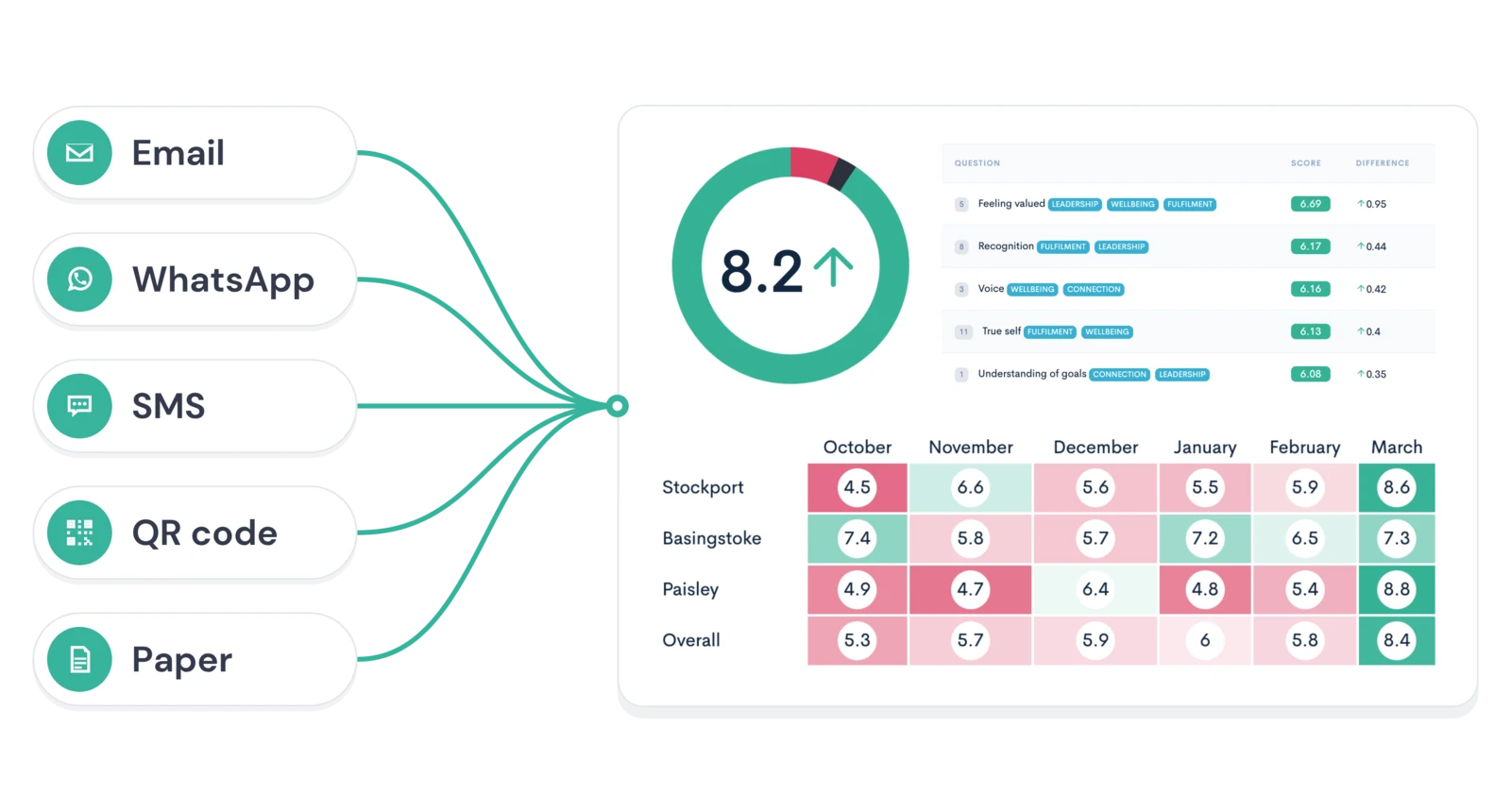
Your people are spread across venues, departments and shifts that rarely overlap. Staff can answer in WhatsApp or by SMS, one question at a time, or scan a QR code by the rota or in the staff room. People scan the code or follow the link to take part. For a kitchen where phones stay in the locker, we share paper forms for you to print. Scanned forms are read automatically.

Seasonal, casual and part-time staff can take part as easily as your head chef. Every survey can be split by any segmentation item, such as venue, department or shift. Paper, open-link and QR-code surveys are pre-tagged with as many segmentation options as you need.

Giving people more than one way to answer matters: across 114 experiments, web surveys got lower response rates than other ways of asking, and in another study SMS invitations beat email for surveys taken on a phone.

Surveys run in over 100 languages. Surveys can be run in many different languages, but not all are available with WhatsApp.

See reach every employee for more.

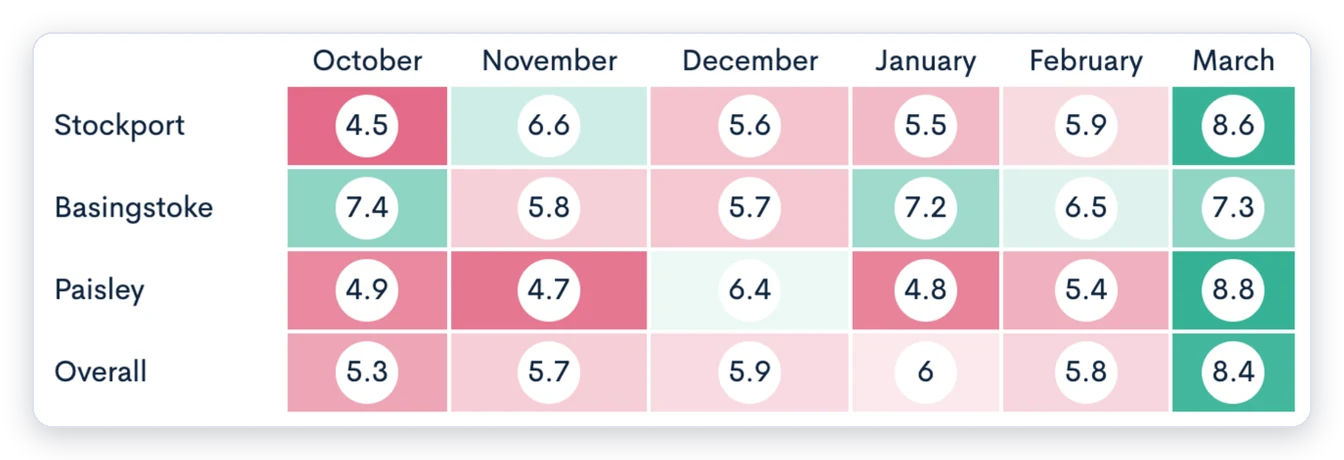
Answers by email, WhatsApp, SMS, QR code or even paper arriving in one place: a Ten Space dashboard with an overall score, scores by question and a heatmap of scores by site.

How do you develop people in a sector where they move on fast?

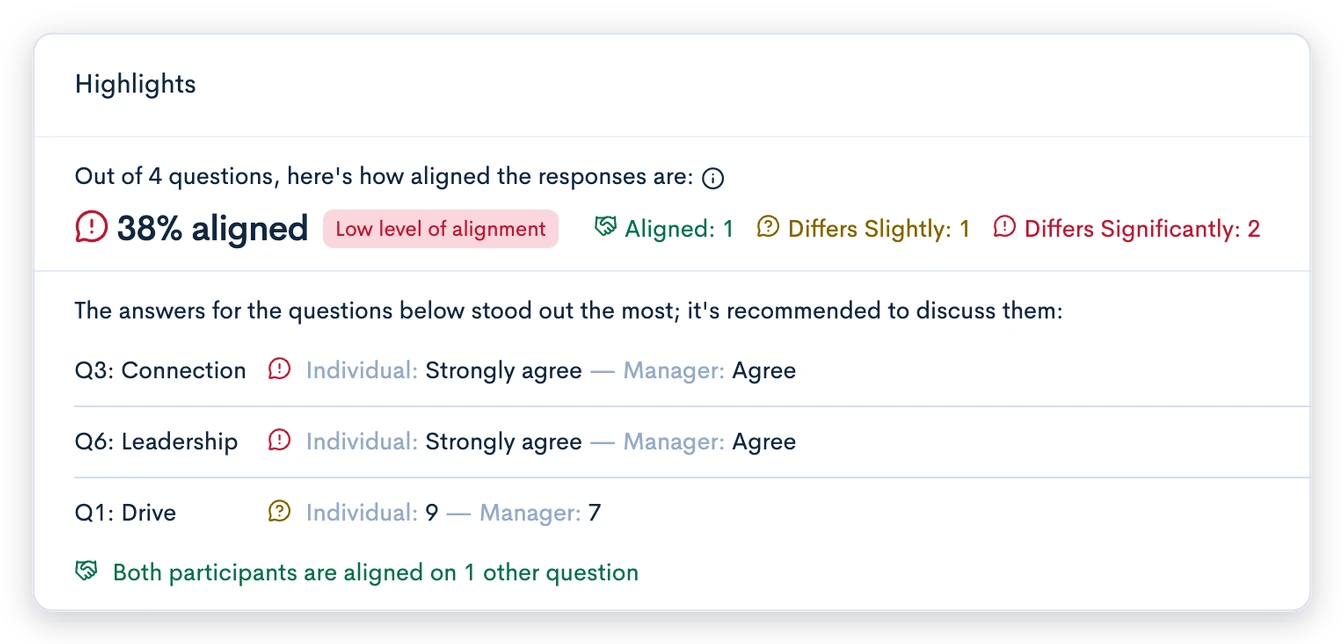
With short, regular conversations and appraisals that fit around shifts. Appraisals run on templates your HR team controls, on a cycle you choose, ad hoc or both, with the gaps between self and manager reviews highlighted. One-to-ones give the two people in any regular conversation a shared agenda, with notes and actions kept against every talking point. With the WhatsApp or SMS add-on, people can complete their part in the chat, question by question, so staff with no work email take part too.

There is ground to make up. The Employer Skills Survey found that 18% of hotel and restaurant employers' training was only health and safety or induction, and that they were the least likely of any sector to train staff to Level 4 or above. Research across sectors finds that support for development keeps people only when they can also see a way to progress.

Ten Space's questions for hospitality are ready for appraisals and one-to-ones, and the goals and actions that come out of a survey carry through to each person's reviews.

See performance management for more.

An appraisal in Ten Space with demo data: how closely the employee's and the manager's answers agree, and the questions where they differ most

Hospitality staff survey questions, by issue

The questions are where it starts: they show you where to act. Each group below begins with what research on hospitality has found, says what the questions help you see and how to track them, then gives the questions in a box. Statements are answered on a scale from strongly disagree to strongly agree.

The first question in each box is the core question for that issue. Keep it the same from one survey to the next: research on measuring change over time shows that comparisons only hold when the question stays the same. Use the rest as they are, add your own, or ask us: we work with you to fine-tune your questions.

Turnover and retention

Will new starters stay past their first few months?

Over a third of hospitality staff have been in their job for less than a year, according to CIPD's analysis of ONS data. A meta-analysis of 144 studies found that burnout, role stress and support from co-workers are more closely tied to hospitality workers' plans to leave than to other workers', and thinking about leaving is itself the strongest single predictor of actually leaving, so ask it early.

What it helps you see: who is thinking of leaving in their first weeks, and what is behind it, from the rota to the team around them.

Questions to ask

  • I see myself still working here in a year's time.
  • My first shifts were well organised and I knew who to ask.
  • I was trained properly before I worked on my own.
  • I can see a future for myself here.
  • What nearly made you leave, or still might?

How to track it: ask new starters through an onboarding journey, for example on their first day and again after a month, and leavers through an exit survey. Compare venues on a dashboard to see where people leave soonest.

Shift work and fatigue

Do rotas let people plan their lives?

About 337,000 people in accommodation and food services are on zero-hours contracts, more than a quarter of everyone in the UK on such a contract. In a large study of service-sector workers in the US, unstable and unpredictable schedules were much more strongly linked to psychological distress, poor sleep and unhappiness than low pay was.

What it helps you see: whether rotas come with enough notice, whether people get the hours they were promised, and whether breaks happen when it's busy.

Questions to ask

  • My hours and rota let me get enough rest between shifts.
  • I get my rota with enough notice to plan my life.
  • I get the hours I was promised.
  • My breaks happen, even on busy services.

How to track it: ask in a short pulse survey every month, or after a change to how rotas are made, and compare venues and departments.

Pay and recognition

Do people feel fairly paid, and are tips shared fairly?

Median monthly pay in accommodation and food services was £1,446 in August 2026, against £2,659 across all employees, a gap that also reflects shorter hours.

What it helps you see: whether people feel fairly paid for what they do, and whether they understand how tips and service charges are shared and think it's fair.

Questions to ask

  • I am fairly paid for the work I do.
  • I understand how tips and service charges are shared here.
  • The way tips are shared is fair.
  • Good work is noticed and recognised here.

How to track it: ask everyone when you review your tipping policy, and compare front of house with the kitchen.

Discrimination, harassment and inclusion

Are staff protected from harassment, including by guests?

In a 2025/26 survey of 252 hospitality workers in Scotland, 83.1% had experienced verbal abuse and nearly half had experienced sexual harassment or abuse at least sometimes, mostly from guests, and much of it went unreported.

What it helps you see: what people experience and see, from guests, colleagues and managers, whether they report it, and what happened when they did.

Questions to ask

  • I am treated with respect by the people I work with.
  • I feel safe from harassment by guests.
  • My manager steps in when a guest crosses the line.
  • If I reported harassment, I'm confident it would be dealt with.

How to track it: ask in every survey, with the ethics filter on so results are only shown for groups of six or more, and compare venues and shifts. An alert tells the right person that an answer needs attention.

Management and support

Are shift managers bringing out the best in people?

Where hotels and restaurants have skills gaps, 65% involve management and leadership skills, against 49% across all sectors. In a study of 3,149 employees in a restaurant chain, managers who were open to ideas got more of them, because staff felt safe to speak up.

What it helps you see: which managers give feedback, deal with problems and share out shifts fairly, and where people feel safe to suggest a better way.

Questions to ask

  • My manager supports me when I need it.
  • My manager is fair when sharing out shifts.
  • I get useful feedback on how I'm doing.
  • I feel safe to suggest a better way of doing things.
  • What one thing would make your shifts run better?

How to track it: split results by venue and department, with the ethics filter on, and bring what you learn into managers' one-to-ones.

Burnout and wellbeing · Safety

Is the pressure of service getting to people?

Accommodation and food services has the highest rate of self-reported injury at work of any industry: 3,080 per 100,000 workers, against 1,780 across all industries. HSE says slips and trips are the most common cause of major injury in UK workplaces, and that kitchen assistants, chefs and waiting staff are the most affected. Studies of chefs in Northern Ireland and of Michelin-starred kitchens in Great Britain and Ireland describe high stress, and bullying passed off as part of the culture.

What it helps you see: where rushing and short staffing put people at risk, how close people are to burning out at peak, and whether banter crosses a line.

Questions to ask

  • I have enough energy left for life outside work.
  • I feel safe at work.
  • We have enough people on shift to work safely when it's busy.
  • The people I work with support each other.
  • Banter in my team never crosses the line into bullying.

How to track it: ask after your busiest weeks, and compare kitchens, bars and floors on a dashboard.
How do you track staff turnover and morale across venues?

Run a short pulse survey, normally fewer than ten questions, after a busy season or on a schedule you set, with the same core questions each time. Then you can see whether a new rota system or a new general manager made a difference.

Follow new starters with an onboarding journey, for example on their first day and again after a month, and ask leavers why they went with an exit survey. These are surveys like any other, so they go out automatically, by email, WhatsApp or SMS.

Compare venues, departments and shifts, front of house with the kitchen, on dashboards for hospitality. AI analysts specific to your sector, configured for your organisation, summarise every survey, team and question, and suggest prioritised actions you can accept, assign or ignore. The decisions stay with you.

Then tell your teams what you did. Research on employee surveys found that staff who skip surveys are more likely to be planning to leave, and to believe nothing will be done with what they say.

Turn what you hear into actions, each with an owner and a due date, linked to the result it came from. Reminders go out automatically, and progress is tracked for you.

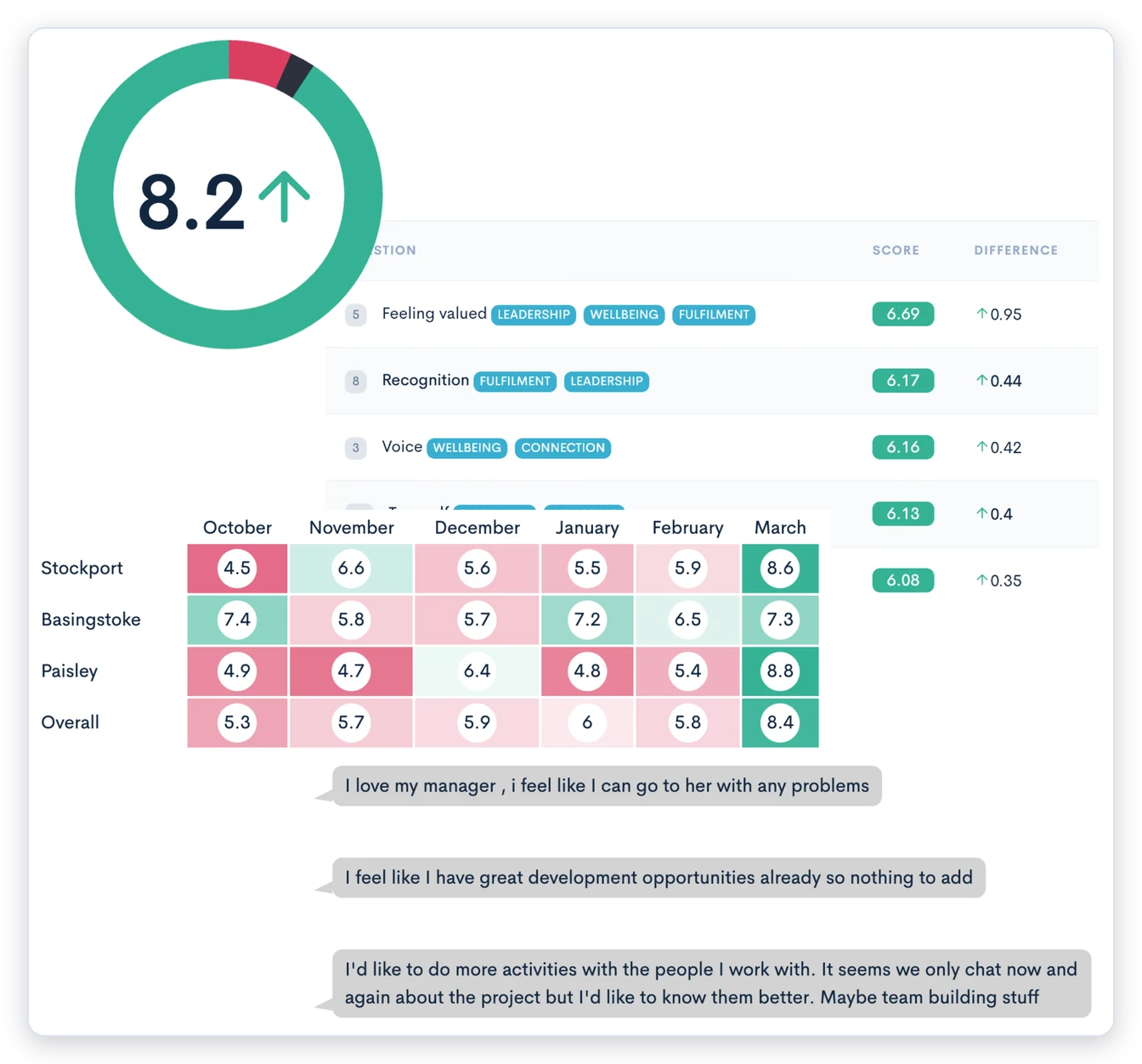
A Ten Space dashboard with demo results: a headline score, question scores, a heatmap by site and comments

What does Ten Space do for hospitality businesses?

It brings staff surveys and appraisals together in one platform, with UK-based experts alongside you.

  • Hear from every shift, front of house and back, by email, WhatsApp, SMS, QR code or even paper.
  • Catch new starters before they leave, with onboarding check-ins such as their first day and a month later.
  • Compare venues, departments and shifts on dashboards for hospitality.
  • With the WhatsApp or SMS add-on, run appraisals your team can complete on their phones.
  • Hear what staff say about rotas, tips and harassment, and turn it into actions, with reminders that go out automatically.
  • Work with a dedicated client success manager: a named UK-based expert who works alongside your team.
A heatmap of demo results in Ten Space, comparing three sites month by month

Questions people ask

When is the best time to survey hospitality staff?

Away from your busiest weeks, and often enough to act on what you hear. Run a fuller survey in a quieter period and short pulse surveys in between. There is no fixed rhythm: we help you choose one that fits your seasons.

Can seasonal, casual and agency staff take part?

Yes. Anyone you invite can answer by email, WhatsApp or SMS, and a QR code on the wall lets anyone on shift take part. No work email address is needed.

Can hospitality staff complete appraisals on a phone?

Yes. With the WhatsApp or SMS add-on, people can complete their part in the chat, question by question, so staff with no work email take part too. Goals and one-to-ones sit in the same platform, so reviews build on what your team has told you.

Will staff report harassment in a survey?

People answer more openly when they trust how their answers are used. With the ethics filter enabled (the most common setup), results are only shown for groups of six or more. An alert can tell the right person that an answer needs attention. What they can then see is still set by their role.

Does Ten Space have staff survey questions for hospitality?

Yes. Ten Space has questions specific to your sector for surveys, journeys, appraisals and one-to-ones, and dashboards for your sector for surveys and journeys. Use them as they are or add your own, and we work with you to fine-tune your questions.

Can we compare our venues?

Yes. Every survey can be split by any segmentation item, such as venue, department, shift or role. Paper, open-link and QR-code surveys are pre-tagged with as many segmentation options as you need.

Sign up for our regular round up